 Our commitment to empowering young people with the skills, training and experience to succeed personally and professionally has been unwavering since 2000 when the first FACES program was launched. To that end, FACES programs have served more than 800 youth throughout California over the past 16 years. This journey has been extraordinary for all of us who have been involved in FACES programs. It has been a journey of significant discovery and growth – elements that are inherent in any effort that works with young people.
This important journey started with an understanding of some very clear challenges.
In 2000, healthcare was facing tremendous gaps in its workforce. Moreover, the existing healthcare workforce did not adequately reflect the tremendous cultural and linguistic diversity of communities that our healthcare institutions were serving. Mirroring the general population throughout the nation, California’s health care consumers were extraordinarily diverse. At the same time, significant disparities existed in the workforce responsible for delivering health care to them. Although they represented more than a third of California’s population, Latinos and African Americans comprised less than 5% of the state’s doctors. Similar data existed for other healthcare professions. Clearly, our state workforce did not represent the rich cultural, ethnic and linguistic diversity of its communities.
We also understood that the reasons for the lack of diversity among California health professionals were complex. A plethora of socioeconomic factors in predominantly disadvantaged African American, Latino, and Native American communities conspired to close doors for students with professional aspirations to pursue careers in the health professions. Public school students in Oakland and Berkeley, for example, struggled daily with the effects of low-performing and poorly resourced schools, limited role models, lack of extracurricular resources, and the stresses of living in neighborhoods with high rates of poverty, crime, violence, and unemployment. For the youth residing in our local disadvantaged communities, homicide was quickly becoming the leading cause of death. Another factor was the well-known “achievement gap.” A 2005 Harvard University study found that just 48 out of 100 freshmen who entered Oakland public high schools graduated. With such poor preparation, it was not surprising that young people from our communities entered college and graduated at much lower rates than other students.
We understood that if health care systems were to become more responsive to the complex needs of its consumers, health providers must appropriately respond to consumers from a broad spectrum of ethnic, racial, linguistic, and cultural backgrounds. A key strategy for increasing cultural competency in health care was to diversify the workforce to better reflect consumers. For this to happen, far more young people who reflected our community’s diversity must graduate high school in good standing and succeed in courses of study culminating in careers that support the health of community members. Results from the first 16 years of FACES for the Future programs have demonstrated that the time to start preparatory efforts is early in high school, if not sooner.
FACES alumni are now represented in multiple sectors of the heath care, non-profit and educational workforce. They are becoming and/or now serve as leaders and agents of change in their communities. They reflect the diversity of culture, language and “lived experience” that is so important in working effectively with people from different backgrounds. Regardless of the particular field they have chosen to pursue, they are invaluable resources, advocates and champions for the community. Alumni share that the early support, mentorship and training that they received in high school were instrumental in helping them to pursue their goals. We are deeply proud of the impact that FACES programs have had on the young people we have served, and we are even more proud of the impact that our alumni are having on others.
However, the work is far from complete. Unfortunately, the challenges that inspired us to create FACES sixteen years ago continue. Our national healthcare workforce still continues to experience profound shortages. While the ACA has increased accessibility to medical services, the efforts to increase the health care workforce are now being outpaced by demand, and we, as a nation, continue to face significant shortages in our workforce, particularly in primary care, allied health, nursing and mental health. Additionally, disparities continue in our educational pipelines. The documented “achievement gap” for disadvantaged youth persists, and although it is narrowing in some areas, all high school students in the U.S. are falling behind. The fact remains that young people from environmentally and socio-economically disadvantaged communities are particularly at risk for academic failure. The need to provide a holistic and comprehensive approach to address these workforce and educational challenges remains more relevant and important than ever, but not simply just at a local level. The urgency for national impact is clear.
We entered 2016 with a new federal grant from the Office of Minority Health to support our program replication efforts nationally. Following several successful years of statewide growth, we have now arrived at a time when we can address these pertinent issues on a national scale. It is a profoundly exciting time for us. It is an opportunity to affect positive change for our young people on a much broader scale. As a pediatrician and father, I cannot express adequately enough how important this is to me.
From its conception, FACES programs were designed to listen to young people and meet them where they are. It is at the core of what we do and what we will continue to do. I welcome each of you to walk with us, through your support and encouragement, in our efforts to change the face of healthcare through the empowerment of young people in our communities.
– Dr. Tomás A. Magaña, Founding Director of FACES for the Future Coalition

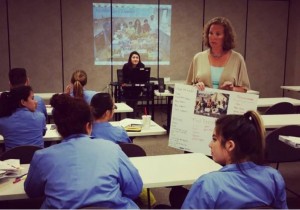
 An FSMA student writes notes during the group activity on problem solving and patient centered care
 Student’s act as doctors for a series of patient care simulations.

 Since 2000, FACES for the Future Coalition has established successful programs throughout California that support at-risk, minority high school students interested in careers in global and public health. On paper, I provide technical assistance to our existing programs, help build new FACES programs in communities of need, and I work on curriculum development, program evaluation and overall tool kit design. In practice, I am both mentor and mother. My job at FACES is multi-faceted, and I LOVE it. Anyone who knows me will tell you that boredom and I don’t get along, so the fact that I wear many hats suits me just fine. But it’s more than that. My position allows me to move between two very different perspectives that support and sustain one another – what happens “on the ground” with our students and a bird’s-eye-view of broader workforce development. Both ends of the spectrum inform each other, and I’m constantly made aware that individual programs are best served by incorporating trends in policy and workforce development, while broader program replication and advocacy must keep students’ realities at the mission’s core.
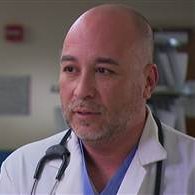 There were some who viewed my childhood and believed I wouldn’t amount to much. From their limited viewpoint, I might see why they felt that way. They saw a poor Chicano boy from an East Los Angeles barrio being raised by a single mother in the absence of successful role models, and erroneously concluded these challenges would break me. Instead, they formed me. The lessons I learned from overcoming those challenges have directly influenced my success as a community-based pediatrician and Director of the FACES for the Future Coalition. Young people like me who have been marginalized by mainstream society and overcome similar challenges should be recruited to the health professions, including the global health field. Their unique experiences are needed to inform and improve the healthcare practice that directly addresses many of the negative health outcomes related to poverty, limited resources and disparity.