FACES for the Future Coalition

Changing the face of health.

  • Home
  • About Us
    • Introduction
    • Our Leadership
      • Our Vistas
      • Affiliate Leadership
    • Our Youth
    • Our Impact
    • The FACES Youth Advisory Council 
    • Our National Expansion
  • Academic Year Programs
    • California
      • Alameda
      • Hayward
      • Sacramento
      • San Diego
      • San Francisco
    • Colorado
      • Denver
    • New Mexico
      • Albuquerque
  • Other Programs
    • Public Health Youth Corps
    • Summer Programs
      • FACES Summer Medical Academy
      • Behavioral Health Undergraduate Summit
    • Global Health Pathway
  • Resources
    • Blog
    • Media and News
    • Resources for Students
      • Program & Scholarship Opportunities
      • Health Careers Information
  • Alumni
    • Success Stories
    • FACES Connect Video Series
  • Contact Us
  • Hire Us

“Healthcare is a calling”, a speech by Edward Hinton at the FACES S. Alameda County Graduation 2017

FACES South Alameda County graduating seniors with Program Coordinator, Reatha Conn.

“Good evening ladies and gentlemen. I am truly honored to be here with you this evening.

Reatha (Program Coordinator) has been with your students every step of the way and has been very instrumental in facilitating this program in a positive manner. So I would like to say thank you to Reatha and the entire FACES team for your energy and efforts in developing these students and helping them step forward into a future in healthcare.

I always say working in health care is a calling… You have to have a passion for helping others. I tell my staff that when you arrive at work, to leave emotion at the door. Once you step through the doorway, everything you do should be about patient care.

As you step into the future of healthcare, it is important to know that you are going to see, hear and experience a variety of circumstances. Some will be more challenging than others. But if your heart is in it and if you maintain your focus, you will be successful no matter what that challenge might be.

Left: Eulix and Edward posing at Alameda Hospital. Right: Eulix in a safety “bunny suit”.

There are a lot of uncertainties in life, especially when it comes to our health. So we try to do everything in our power to live healthy lives and foster healthy environments.

As the Environmental Services Manager, my role is to ensure we work in a clean and safe environment for our patients, visitors, and staff.

When I was first asked to be a part of the FACES for the Future program, I was initially reluctant. My first thoughts were that the students don’t need to know how to clean. They are stepping into healthcare to become doctors, nurses, radiology techs, nutritionists, and clinicians.

So I asked myself, what can I offer these students that would, number 1, keep them engaged, number 2, would be meaningful, and number 3, have a lasting effect on them. Because I am the EVS Manager, I have a role to play in every department. So I decided to treat them as if they were new supervisors and needed to be trained on every aspect of environmental services.

Eulix and Megan were my students. Both were very much engaged and focused, although Eulix, with his sly sense of humor, kept me on my toes. Eulix said to me, “I never really paid attention to the smells that are in hospitals”. A patient was being changed at the time. My only response to him was “life is good”.

We rounded on all departments, we inspected rooms, I even had them interacting with patients performing Patient Satisfaction Surveys to ensure we were meeting their expectations. Occasionally, we joined with other groups to listen in on the lessons that were being taught by my fellow mentors.

Edward with a few FACES South Alameda County health scholars.

This allowed them to meet many employees and managers of various disciplines, from the operating rooms to the emergency room, with my objective being to expose them to other areas of the hospital that might interest them as well as letting them experience the enthusiasm and love people have for their respective fields. All the while, teaching them about maintaining a clean environment, that every position in the hospital is valuable, and we all have a unique role to play in the care of our patients.

In healthcare, the quality of care we give our patients is of the utmost importance. Alameda Hospital and as a member of the entire Alameda Health System. our mission is caring, healing, teaching, and serving all. So as you further your education and knowledge in healthcare, I would encourage you to remember the experience you had here. Remember the lessons you learned from your mentors and how passionate the various employees were when they spoke on why they chose the field they were in. The overall answer is because they love what they do. That very deep passion and love saves lives.

I have worked at several hospitals and no hospital I have had the privilege of working in, represents their mission more than Alameda Hospital. So you all have been able to step into a hospital that truly cares for the lives of others. Cherish the lessons you learned here, and know that whatever path you decide to take in health care is valuable, important, and can make a huge difference in someone’s life.

Thank you!”

-Edward Hinton, 6/1/2017

 

Filed Under: Hot Topics, South Alameda County

FACES, a Heart-centered Approach Makes Good Sense: Sense of Family, Sense of Community, Sense of Compassion and Opportunity

sd_faces-logo_long-01

FACES for the Future students in San Diego are a special part of the Rady Children’s Hospital family.  When I first met Dr. Tomás Magaña in 2008, I was inspired by the work he had been doing and the students I met in Oakland. My intention was to develop a similar program for a group of students at Hoover High School in City Heights, an urban neighborhood in San Diego.  We worked with all our heart to design a program that would provide academic rigor, career exploration and campus visits to a variety of colleges and universities, professional development and real-world career experience. We worked with clinicians in our hospital to design relevant career experiences, funders to provide support and guidance, and school counselors to manipulate what was to me the mysterious master schedule so we could group the students in a cohort that would travel through the program together for the next 3 years.  We recruited 25 sophomores, and planned to take up to 30 new sophomores each year for a total enrollment of 90 students. We identified a program coordinator and a team of teachers. Then we turned on the switch and our enthusiasm was contagious.   Every aspect of the program we had planned was important, but the magic of the program shines through a heart-centered approach that values compassion, family, friendship, community and purpose.

15497840_10157945436600051_1329983270_n

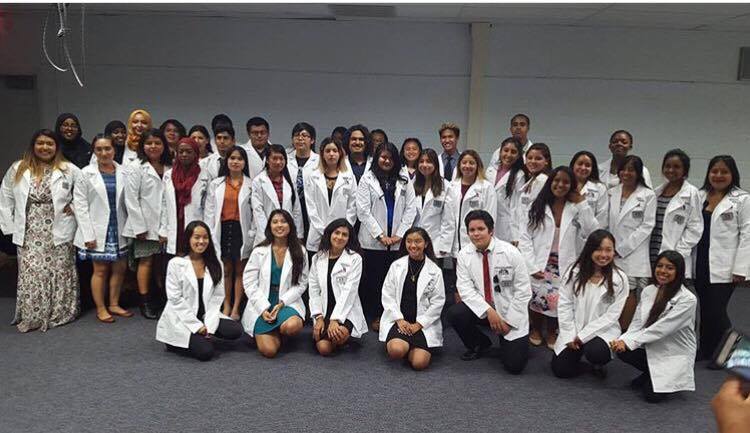
Lab Coat Ceremony for Class of 2017.

Our students are learning, growing, graduating high school, setting career goals, pursuing post-secondary education and our first class is just starting to embark on their careers. FACES has become very popular with students.   Today the program has grown to nearly 300 students at Hoover High, expanded to another 80 students at nearby Crawford High, and has become a highly reputed program in San Diego.   Each year we ask the students what has been the most important part of the program over their years, and each year we hear the same response:  the sense of family and the opportunity for real world experiences with people who care. The refrains I’ve heard from the students are, “if it weren’t for the FACES family I would have dropped out of school, I couldn’t have done this, I wouldn’t be going to college, I don’t know where I would be, I wouldn’t have been able to handle my life, I would have no purpose.”   And each year I reflect on – how does this happen? I ask myself,  “How does a group of diverse students, representing a wide range of cultures, ethnicities, languages, histories, beliefs, struggles and community experiences become a family and why is this so critical to their success?”

15555930_10157945436265051_1683490737_n

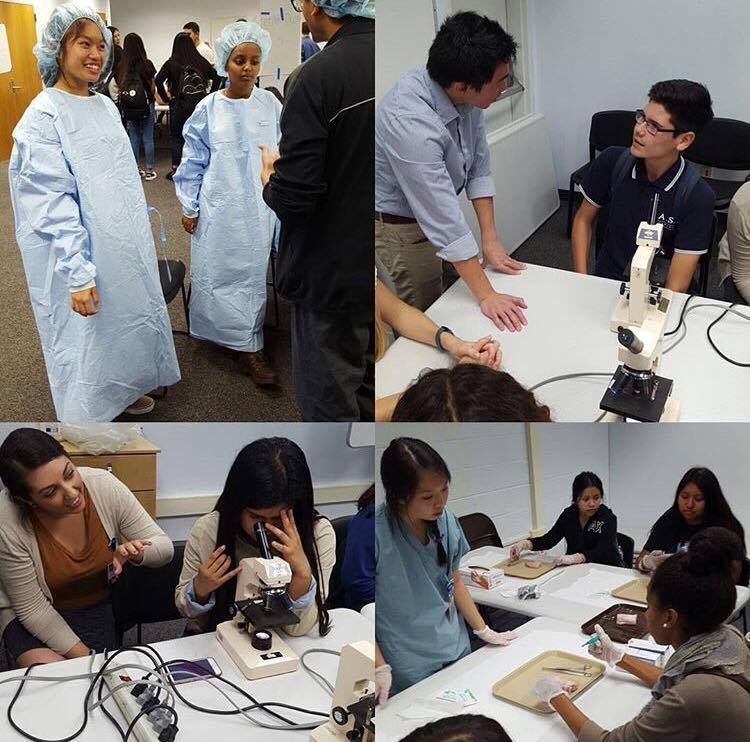
Sophomore and Junior students at Doc 4 a Day with UCSD residents.

What I have seen is that the sense of belonging, connectedness and community is truly a protective factor for youth that builds their resiliency and self-confidence. What I have come to understand is this starts with the passion, determination, and a heart-centered approach of a few influential champions whose desire is to inspire and provide equal opportunities for disadvantaged youth to reach their full potential.  This is a powerful catalyst and at the core of starting a new program. Everything radiates from this.   Selection of program staff and teaching staff is key, and an essential ingredient beyond technical skills and knowledge is the embodiment of the same determination and heart-centered approach.    The staff are role models, leaders, coaches, educators, confidants, cheerleaders, trouble shooters, planners, integrators and a resource for the students. In our programs, the school provides space for the FACES program, and the staff are housed at the school every day and available to the students. They guide a culture of compassion and purpose, providing workshops, coordinating college field trips and team building activities, monitoring student performance, providing psycho-social support, arranging for and coordinating career experiences for the students, and connecting with teachers, school counselors, other school personnel and parents. They give their heart, and the program leaders provide training and resources to encourage their self-care, reflection, a learning environment, camaraderie and building their own sense of family, direction and purpose.

15554806_10157945436450051_2134287828_n

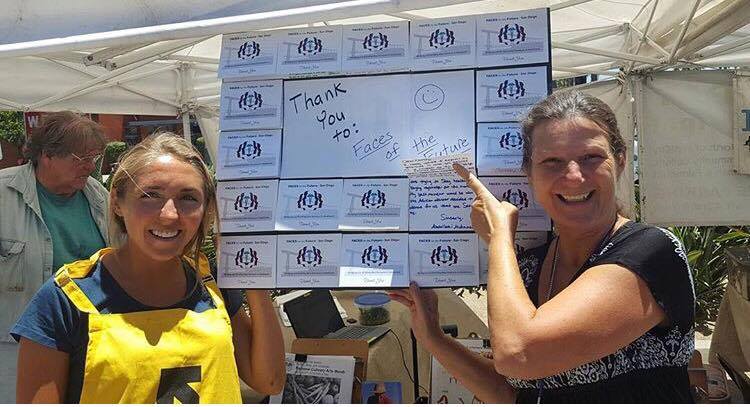
Farmer’s Market community with Thank You cards from FACES students.

Building this positive sense of community for the students starts with engaging them in the community. Our community partners are an essential and integral part of FACES, helping the students build community while learning about the importance of social and economic determinants that influence optimal health outcomes and one’s ability to reach their full potential in a life of purpose.  The students get started participating in community service activities in their first years in the program, and in their junior year they are placed in community health-related organizations for job shadowing and career experience rotations.  Community organizations are selected that have a strong mission and purpose in the community, can provide a supervised experience for student learning, and mimic the same determination and values of the FACES program.  It is an opportunity for the students to learn about health topics and resources available to them and their families and neighbors, while shadowing professionals in community-based health related careers.  To reinforce their learning and experience, the juniors then conduct a school-based health fair for the student body; educating their peers and sharing how to access resources.  As they educate their peers they become the experts and gain confidence in their own abilities and knowledge.   For many students this is their first experience requiring them to be accountable in a professional setting and it also builds their sense of connection and pride with the larger community in which they live. By the time the students begin their clinical rotations in Rady Children’s, they have been well-prepared and well-supported and are welcomed into the Rady Children’s family of caregivers.  This is frequently when students become inspired to pursue specific career pathways.  Hospital staff mimic the same values and demonstrate heart-centered care and support.  For the students, these experiences, coupled with team building, college tours, and workshops all work together to create a structure where the students are learning together, sharing new experiences, teaching each other, and building a sense of connectedness.  This is the “sense of family” the students talk about.

15497488_10157945436520051_1257883360_n

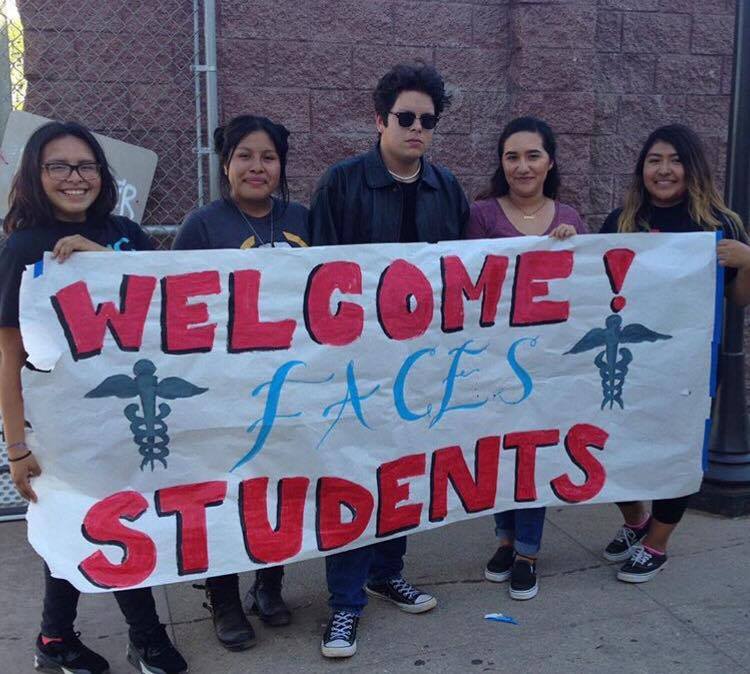
Students welcoming new students to the FACES family!

I believe what sets FACES apart as not just another career internship program is the underlying philosophy and daily demonstration of a heart-centered approach and belief that compassion, sense of family, community, and purpose is of utmost importance.  Of course we focus on academic rigor and career exploration, and FACES is a health career pathway program, but it truly a unique youth development program.  A young person’s character and purpose is not developed passively.  Through experiences and trials and overcoming obstacles, coupled with the support of a compassionate family and community, students grow their inner strength, create clear visions, inspire their ambition, and set a path to create their own opportunities and achieve their own success.  In turn, they become equipped to become compassionate professionals, family members and leaders who will bring positive energy and change in a complex world.    There is an old Cherokee saying, “Every action should be taken with thoughts of its effects on children seven generations from now.”   FACES is working to lay the groundwork and train the next generation of adults that will transform the quality of life for families and generations to come.

bio-cheri-fidler-sd

Cheri Fidler
Director, Center for Healthier Communities
Rady Children’s Hospital, San Diego, CA

Learn more about FACES San Diego.

Filed Under: Hot Topics, San Diego

Student Blogs – Mentoring the Next Generation of Global Health Workers

calendar 6In June 2016, twelve FACES for the Future students, each representing a FACES program from across California (San Diego, Hayward, San Francisco and Oakland), traveled to Washington DC to participate in our inaugural Global Health Youth Summit (GHYS).
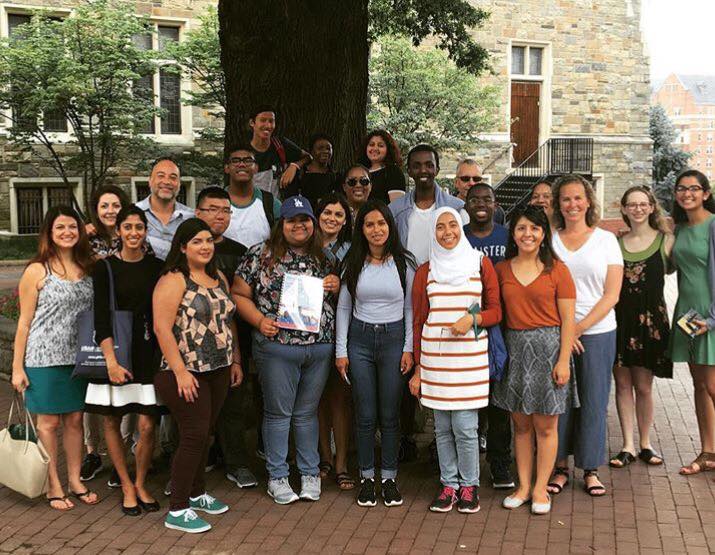
Read the various blogs from FACES Scholars who participated in the Summit and learn how that experience impacted them.  Go to BLOGS.

Filed Under: Global Health, Hot Topics

Lived Experience and Diversity Are Essential to the Future of Global Health

13439155_10153888799894531_2724412775986411967_nOften, I’ll hear someone ask in a diversity conversation, “Why do we need to start so early in order for students to succeed? Why high school?” My response is simple – because we are losing too many valuable diverse candidates with lived experience before and during college. How do we expect to benefit from all they have learned through navigating systems, challenges and adversity and put that knowledge into practice in a global context if they are never able to get there?

FACES for the Future programs are meant to help minority high school students achieve greater access to careers in health care. Founded in 2000, the program has supported students interested in careers in medicine, nursing, allied health, public health and behavioral health. We have programs throughout California, and recently we were awarded a grant from the Office of Minority Health to begin scaling nationally.

But program replication isn’t our only mission. We want to constantly innovate our program model to address new concerns in health workforce development. Over time our team understood that the issues of diversity we face domestically are not unique, so we set our intentions toward addressing the need for diversity within global health. We did this to support FACES students of course, because we knew our students need support to achieve their professional goals. But more importantly we did it for others, because we know our nation needs skilled, diverse health workers to lead the next generation in finding solutions to health and wellness issues globally.

Over the past two years, FACES has had the pleasure of partnering with Global Health Fellows Program (GHFP) II, the US Agency for International Development (USAID) and GlobeMed to begin building a global health career pathway for underserved minority students. We’ve developed curriculum, trainings and webinars to expose high school students to global health. This effort culminated on June 21st when 12 students from across the FACES programs flew into Washington, D. C. to participate in the 2016 Global Health Youth Summit; a program co-developed by FACES and GHFP-II. I don’t know who is more excited – the students or me!

In a recent report from The Pell Institute for the Study of Opportunity in Higher Education entitled “Indicators of Higher Education Equity in the United States,” we learn that only 21% of low-income students in the United States who achieved acceptance into college end up being able to secure a Bachelor’s degree. Equally bleak, a 2014 National Student Clearinghouse report outlines that only 39% of entering students will either receive an Associate’s degree or transfer to a four-year college within six years, and a full 25% of students who enter a community college in the fall will not return in the spring.

Often times we talk about youth being the “first in their family to go to college.” But going to college and finishing college are two different things, and lead to drastically different economic results for that young person’s family, as well as in how that difference curtails our efforts to fully diversify the global health workforce.

All indications lead to the necessity of building global health professional pathway programs at the high school level in order to provide the services and supports that young people need to continue up the pipeline. Students need to be exposed to career options in global health sooner, need to gain experience in work-based learning and professionalism to be competitive for internships in college, and need to be supported with safety net services that allow them to transform challenges into opportunities.

Yet we know that disparities exist in K-12 education and while the well documented “achievement gap” is narrowing and high school graduation rates are up throughout the U.S., there persists an overall 26 point differential in all subject areas between black and Latino students versus their white peers. Students from environmentally disadvantaged and socio-economically disadvantaged regions need a “leg up” at the high school level in order to be competitive further up the global health careers pipeline. FACES is that “leg up.”

So the question becomes, “Why not just work with the students who get through on their own? What do we lose when minority students from underserved backgrounds don’t make it through the global health pathway?”

Well, I’d say we lose a lot. Take a look at a snapshot of one of our programs:

Hayward, California – 45 students (2013-14 and 2014-15)

  • 62% live at or below the Federal poverty line
  • 25% have a history of homelessness
  • 76% have incarcerated friends and family
  • 80% have fractured families due to divorce, abandonment and immigration issues
  • 39% will be the first in their family to graduate from high school
  • 95% have experienced violence both in the home and community

While these students are certainly facing challenges that many of us would find untenable, they offer us the diversity, resilience and distance traveled we are looking for in the global health workforce of tomorrow.

But before we view them through a deficit lens, let’s also look at the reality of their resilience and inherent value to the global health workforce. This same group of FACES students represent 14 different ethnicities, speak seven languages and 68% of them are bi-lingual or multi-lingual. While 77% of them were not on track to graduate from high school when they were accepted into our program, with proper interventions, support and coordinated services they showed the tenacity to succeed. In the cohorts we examined, 100% of them graduated from high school and of those who applied to college 100% were accepted.

The key to diversifying the global health workforce is not found in pockets of students who are racially and ethnically diverse, yet who come from resourced backgrounds. If we view diversity through that lens alone, we are missing out on a great opportunity. We will not be able to leverage the lived experiences of youth who have overcome adversity and who will bring empathy, strength and tenacity to their interpersonal communication, team building and the limited resource management required of careers in global health.

To me, the irony of the FACES program is that we build programs to support students, but our world needs FACES students more than they need us. Who better to send to the refugee camps in Europe than students who have been displaced by violence and come with the empathy they need to help? Who better to send to a community where language barriers exist between those seeking health care and those providing it than a young person who has been the medical interpreter for their family since they were seven years old? Who better to work with communities facing environmental toxins better than someone who has lived in a disadvantaged community and whose sibling’s asthma was worse because of the air quality in their neighborhood? We need their lived experiences, we need their tenacity, and we need their ability to problem solve.

That is why I am so proud to be a chaperone for the 2016 Global Health Youth Summit. Yes, it will be wonderful to be with young people as they see the Lincoln Memorial for the first time, or see the White House or for a few, get on a plane for the first time! But I’m most excited to have them meet the incredible mentors from USAID, GHFP-II and GlobeMed, who are going to open up a world of possibility for them. Through the Global Health Youth Summit, they will have the opportunity to envision themselves in a career serving people around the world. And the adults will be able to envision a world where the very best of the United States is represented when we reach out to communities across miles to find solutions to health issues.

See more at: https://www.ghfp.net/content/lived-experience-and-diversity-are-essential-future-global-health#sthash.HqNjKnGX.4NeMCqHf.dpuf

– By S. Brooke Briggance, Deputy Director of FACES for the Future Coalition

Filed Under: Global Health, Hot Topics

Immersing Youth in Global Health

13507103_10153886905169531_9022037975228311058_nFor the past two years, FACES for the Future Coalition has proudly partnered with the Global Health Fellows Program (GHFP) II to develop a global health career pathway for diverse youth underrepresented in global health. To this end, our goals are to expose youth to global health careers at an early stage of their educational development and to inspire them to pursue careers in global health. GHFP-II and FACES believe that our youth reflect the diversity of backgrounds and lived experiences that will make them ideally suited for global health careers.

The process of educating young people about global health has been an extraordinary experience. Our students have embraced the notion of global service and many, who are immigrants themselves or come from immigrant families, have expressed a personal connection with the values that are inherent in global health work. Often through sheer necessity, they have already developed unique skills, such as resilience, innovation and cross-cultural communication that align well with the skills required for global heath work. For me, it has been a privilege to witness their awareness evolve through global health competency and leadership training.

For youth we work with, simply talking to them about career opportunities in global heath is insufficient and frankly, ineffective. The perceived and structural barriers our students face conspire to prevent them from viewing those careers as realistic options, even when they possess an interest. As one FACES student shared, “Being from where I grew up, it’s a challenge because the first thing on your mind isn’t becoming a doctor or anything. It’s really just about survival and how you’re going to be a provider for your family.” Career awareness is only part of the process – it is a start. We must work with the students to address their realities and priorities, and attempt to reframe the notion of possibility for them.

As we approach the eve of our first Global Health Youth Summit (GHYS) in Washington DC sponsored by GHFP-II, there is a palpable energy and excitement among the students. In a few days, twelve capable, enthusiastic and diverse youth scholars, representing all FACES’ programs in California, will travel to DC to continue the work we started with them locally. We’re leveraging the global is local framework for this Summit, given the diversity of our youth and their deep desires to give back to their largely immigrant home communities.

Following years of GHFP-II and FACES GH curriculum and leadership development, they possess a basic knowledge of global health practice, career opportunities and the skills required to be a competent professional in this sector. Equally important, they have done personal reflection on why global heath careers make sense for them. The Youth Summit in DC is the culmination and next natural step of professional development for these students. And it is a necessary step. Building off of USAID Global Health bureau’s leadership, GHFP-II and FACES see this Summit as a call to action. We must build upon the awareness, reflections and foundational knowledge by providing mentorship with global health professionals. We must continue to not only create more opportunities for minority students to enter the global health workforce, but challenge the Agency and other government agencies like it, to increase opportunities and activities for more students to gain the experiences needed to work in this field. International experience is a USAID/GH requirement for employment, and yet only a small percentage of the possible GH workforce has this opportunity.

On the other side of this equation, GHFP-II and FACES seek to challenge the students to make connections between health in their local communities and health around the world. This is the fundamental notion behind global is local. For most, it will be the first time they have traveled outside of their local communities. So, during the Summit we plan to strengthen the links between the skills students developed in our preparatory curriculum and a potential future global health career with the USAID. We will ask them to put some of the basic theories of global health into practice through simulation activities with the mentors. We will ask the students to reflect on their experiences and growing awareness of global heath through blogs and social media. We believe the Summit will be a deeply transformative educational and personal experience for these students. Their profound excitement about this opportunity is already palpable and contagious!

As our complementary partner, GHFP-II and the Public Health Institute, FACES’ host organization as well, has provided critical resources to create a learning pathway for diverse, underrepresented and disadvantaged youth. GHFP-II has not only helped to inform our content and training processes, but they have designed a truly unique and innovative global health career experience for deserving high school students. This early career intervention will empower these students to continue to strive beyond their circumstances and see this career pathway as an avenue to better themselves and their community, while meaningfully contributing to the global health workforce. The students and I so look forward to being in DC later this week with GHFP- II to continue doing the work to develop future global health leaders!

See more at: https://www.ghfp.net/content/immersing-youth-global-health#sthash.zNLmjBuz.dpuf 

– By Tomás Magaña, MD, Founder & Director, FACES for the Future Coalition

Filed Under: Global Health, Hot Topics

  • « Previous Page
  • 1
  • 2
  • 3
  • Next Page »
donate
donate
1950 Franklin St, STE 600, Oakland, CA 94612

© 2026 FACES for the Future Coalition. All Rights Reserved.

WordPress Design & Development by HyperArts