FACES for the Future Coalition

Changing the face of health.

  • Home
  • About Us
    • Introduction
    • Our Leadership
      • Our Vistas
      • Affiliate Leadership
    • Our Youth
    • Our Impact
    • The FACES Youth Advisory Council 
    • Our National Expansion
  • Academic Year Programs
    • California
      • Alameda
      • Hayward
      • Sacramento
      • San Diego
      • San Francisco
    • Colorado
      • Denver
    • New Mexico
      • Albuquerque
  • Other Programs
    • Public Health Youth Corps
    • Summer Programs
      • FACES Summer Medical Academy
      • Behavioral Health Undergraduate Summit
    • Global Health Pathway
  • Resources
    • Blog
    • Media and News
    • Resources for Students
      • Program & Scholarship Opportunities
      • Health Careers Information
  • Alumni
    • Success Stories
    • FACES Connect Video Series
  • Contact Us
  • Hire Us

FACES Summer Medical Academy Teaches Culturally Sensitive Care

Many Americans are reluctant to see their doctor. According to a recent survey commissioned by ZocDoc, a medical scheduling company found that 80% of Americans say they delay or avoid getting preventative care. Though there are a number of variables that keep us from seeing our doctors I imagine that the odds of avoiding a doctor visit might be even higher as an immigrant who is unfamiliar with the English language, much less the health care system. Certainly, the American population is in constant flux. New immigrants, including refugees, are changing our population. How we train our health care professionals is changing too.

The Global Health Fellows Program (GHFP) II serves the United States Agency for International Development (USAID) by developing the next generation of global health professionals starting at the high school level with FACES for the Future Coalition (FACES). The program was co- founded 15 years ago by Dr. Tomas Magaña who recognized the lack of diversity in the health professions and shortage of opportunity for youth seeking options to improve their lives. Recently, I had a chance to see their work first-hand during a visit to the FACES Summer Medical Academy (FSMA), located at Samuel Merritt University in Oakland, California.

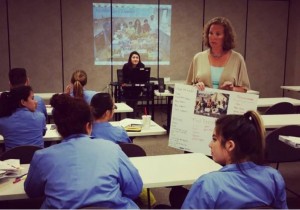
Dr. Tomas Magaña reviews the typical medical school trajectory, two pre-clinical years followed by another two years of clinical training.

Angelina Gordon, GHFP II Director of Communications, Outreach, and Diversity, and I were greeted by Brooke Briggance, FACES Program Director, and a group of 30 young faces – all high school students from the Bay Area. Immediately following a brief introduction by Ms. Briggance, we transitioned into a morning lecture, led by Dr. Magaña. On the lesson plan for the day: Patient Centered Care (PCC). PCC is model that encourages patients to actively participate in decisions about their own care. This method is based on establishing trust and opening of the lines of communication. To introduce the concept students were asked to solve a puzzle using very limited information provided by Dr. Magaña who emphasized the importance of asking the questions, “What do we know? And what do we need to know?” This is all to say, when doctors interact with patients, they may have a chart, but not all the information they need to get to the root of medical concerns – a puzzle to solve in each exam room.

An FSMA student writes notes during the group activity on problem solving and patient centered care

As public health professionals know, a kaleidoscope of factors contributes to each person’s overall health and well-being. Some of those factors, the social determinants of health, are not so pretty. Poverty, political instability, and proximity to environmental hazards, such as landfills or factory farms, are all major influencers of health. Ms. Briggance and Dr. Magaña both reviewed the many ways that health is compromised in America and how groups of people, like African Americans and Latinos, are impacted more than others. When Dr. Magana asked the room full of high school students what they thought was the most important aspect of treating a patient, I immediately thought of genetics, however, the answer turned out to be a patient’s medical history.

Student’s act as doctors for a series of patient care simulations.

To practice collecting a patient’s medical history and the problem solving skills learned earlier that day the students broke up into groups to participate in round robin of patient care simulations. I acted as a newlywed immigrant from Mexico with consistent stomach pain and nausea. In my role, I played an anxious patient who was reluctant to share information with my team of young doctors. I realized that the patient experience can get very awkward, especially when a few of my student doctors posed biting questions, recommended confusing lab tests, or jumped to conclusions. At times, the student’s asked their questions without even taking the time to introduce them or check in to see how I felt or what I thought about their recommendations. However, I could tell that they were trying to get as much information as possible and before long they were finding better ways to ask questions by taking a more attentive and gentle approach.

Overall, it impressed me how driven and thoughtful the FMSA students were. In the two weeks of the FACES program, students were exposed to clinical skills trainings, anatomy and pathology workshops, and of course, culturally sensitive patient centered care. At the end of the day we were left with one more question: how do you become a better doctor? Everyone agreed that it starts by omitting your white coat and connecting as a human being. Perhaps in doing so, health professionals will be better equipped to care for our diverse patients and in turn we will all be a little less reluctant to see the doctor, regardless of our background.

– Maribel Sierra, Communications & Outreach Assistant for the Global Health Fellows Program II

Reproduced with permission from Global Health Fellows Program-II blog.   AgVANTAGE_english

—


Filed Under: Global Health, Hot Topics

A Systems Strengthening Approach to Supporting our Global Health Youth

 FACES-workshop-Brooke.jpg_1978177048Since 2000, FACES for the Future Coalition has established successful programs throughout California that support at-risk, minority high school students interested in careers in global and public health. On paper, I provide technical assistance to our existing programs, help build new FACES programs in communities of need, and I work on curriculum development, program evaluation and overall tool kit design. In practice, I am both mentor and mother. My job at FACES is multi-faceted, and I LOVE it. Anyone who knows me will tell you that boredom and I don’t get along, so the fact that I wear many hats suits me just fine. But it’s more than that. My position allows me to move between two very different perspectives that support and sustain one another – what happens “on the ground” with our students and a bird’s-eye-view of broader workforce development. Both ends of the spectrum inform each other, and I’m constantly made aware that individual programs are best served by incorporating trends in policy and workforce development, while broader program replication and advocacy must keep students’ realities at the mission’s core.
Last year, FACES for the Future began a partnership with Global Health Fellows Program (GHFP) II, hosted by the Public Health Institute that is exploring the application of the FACES program model to include careers in global health. The joint effort is centered on our shared belief that diversifying the global health workforce is a worthy task with tangible benefits, and that FACES students are inherently desirable candidates for careers in global health because they come from multi-lingual, multi-cultural backgrounds and have lived experiences resulting in resiliency, an ability to navigate systems and adaptive solutions-driven approaches to problem solving.

Recently we’ve begun looking at our partnership as a global health pathway system that builds deep partnerships with institutions and agencies further up the pathway while including our work with youth interested in global health careers. What does that mean? Well, FACES programs at the high school level enjoy tremendous success. The model is comprehensive and includes wrap-around services, internships and interventions that support a student holistically. 100% of our students graduate from high school and 92% of them enter into post-secondary pathways including college, professional certification or employment. This is no small feat given that FACES students are facing challenges associated with poverty, fractured families, immigration status, and community violence. If we apply the FACES model and expose youth to careers in global health, I know we’ll achieve similar results because we know the model works. But then what?

Who is going to coordinate services for our FACES students when they move into college ready to begin their journey to a career in global health? Are colleges and professional training institutions truly prepared to work with historically underserved youth and when we build a global health FACES program is the global health professional leadership ready to embrace them when they arrive as graduate level program fellows or future employees? What institutionalized mechanisms are in place to ensure their continued success?

In a recent report from The Pell Institute for the Study of Opportunity in Higher Education entitled “Indicators of Higher Education Equity in the United States,” we learn that only 21% of low-income students in the United States who achieved acceptance into college end up being able to secure a bachelor’s degree. Often times we talk about youth being the “first in their family to go to college.” But going to college and finishing college are two different things, and lead to drastically different economic results for that young person’s family. We also know that the demands of 21st century technology and health delivery models require the highest level of academic rigor and training possible prior to entry into health related professions. Will diversified students be able to access academically rigorous programs if challenges in their personal and academic lives are not fully addressed and supported?

If we truly want to diversify the global health workforce, we are going to be confronted with the need to build bridges that transfer youth into programs at the post-secondary level; creating the continuity of care and services appropriate to the next stage of their professional development. Mentorship, access to academic support, peer networks, connection to wellness resources, professional development and so on; all will enable FACES students to fully realize their dream of joining the global health workforce. It is incumbent upon us to build systems of partnerships that see inherent value in nurturing students and to refuse to build individual programs that lack deeply knit services just because we can.

So from my bird’s-eye-view perspective at FACES, I understand the imperative in the field of global health to diversify its workforce; bringing together the multi-lingual, multi-cultural students who contribute unique and valued skill sets to the work. Yet I know from my direct interactions with students of color who have been underserved, that we will never be successful in building our desired global health workforce unless and until we build the systems of support necessary to ensure we grant each and every diverse student the access and opportunity to become the future of global health.

That’s why I’m grateful for the leadership of GHFP II in bringing together FACES for the Future at the high school level and GlobeMed at the undergraduate level, for the purposes of further exploring how we create such a global health pathway system. This initial effort has led to the development of a GlobeMed chapter at San Francisco State University that will allow FACES students in our Bay Area programs direct access to a partner prepared to train them for global health careers. It is a first step in creating the type of system I’m envisioning, and I see great potential in scaling this effort so we can be reassured that we are recruiting and retaining the very best and brightest, and diverse group of students. Of course, the students deserve our very best efforts on their behalf. But doesn’t the future of the global health workforce deserve it too?

– S. Brooke Briggance, Deputy Director of FACES for the Future Coalition

Reproduced with permission from Global Health Fellows Program-II blog.   AgVANTAGE_english

——————————————————————————————————–


Filed Under: Global Health, Hot Topics

Leveraging Lived Experiences for Global Health

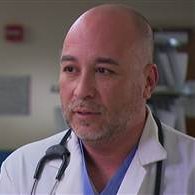
T. Magana, MDThere were some who viewed my childhood and believed I wouldn’t amount to much. From their limited viewpoint, I might see why they felt that way. They saw a poor Chicano boy from an East Los Angeles barrio being raised by a single mother in the absence of successful role models, and erroneously concluded these challenges would break me. Instead, they formed me. The lessons I learned from overcoming those challenges have directly influenced my success as a community-based pediatrician and Director of the FACES for the Future Coalition. Young people like me who have been marginalized by mainstream society and overcome similar challenges should be recruited to the health professions, including the global health field. Their unique experiences are needed to inform and improve the healthcare practice that directly addresses many of the negative health outcomes related to poverty, limited resources and disparity.

I faced multiple challenges growing up – limited financial resources, few positive role models, family problems – all of which could have prevented me from achieving success. Like so many other young men of color with similar histories, I had relatively little understanding of what opportunities existed, and only a vague awareness of what skills I possessed. But, there were key adults in my life, including my family and others, who believed in my talents and potential. It was these people who connected me to important opportunities to develop emotionally and intellectually. Without them, my life trajectory certainly could have taken a very different course.

Many individuals who come from marginalized environments where there are high concentrations of poverty, community violence and health disparities gain valuable skills by successfully coping with adversity. Raised in challenging environments, we learn to be resilient and adaptable not only from our family role models, but also because there is an expectation and necessity to do so. For many of us, the experience of working diligently to develop and sustain a long-term sense of vision and purpose in the face of multiple barriers requires flexibility, perseverance, empathy and a commitment to breaking the negative cycle. It also requires people to support and believe in us. Finally, it requires patience and an unwavering faith in something possible outside of one’s “norm.”

In 2000, I co-founded FACES for the Future to provide youth interested in a career in healthcare access to the required skills and experience. FACES was founded in direct response to two important imperatives: to build a healthcare workforce reflective of our community’s diversity, and to improve adolescent outcomes for at-risk youth through career training and professional development. FACES programs work with underserved, minority high school youth, providing them with comprehensive services that ensure entrance into post-secondary training and college.

In partnership with the Global Health Fellows Program (GHFP) II, FACES is working to take a systems strengthening approach to building a diverse global health workforce. Through the FACES curriculum, our at-risk high school students directly impact the health workforce by increasing the pool of skilled minority students entering college, as well as capitalizing on the inherent skills they have mastered through their lived experiences in overcoming challenges. Leveraging these lived experiences, the FACES programs offer concrete, work-based learning through internships, academic support, case management and counseling, and youth leadership development.

Effective global heath practice requires skills such as cultural acumen, adaptability, innovation, and resourcefulness. Global health workers often must navigate barriers that involve language and cultural discordances. Thus, there is an imperative to build a diverse global health workforce skilled in these competencies, and that requires that global health academics and employers invest in more expansive and inclusive efforts to broaden their outreach. The potential value these young people can bring to the profession via the skills obtained through lived experience is tremendous. However, we cannot ignore the barriers that disadvantaged minorities face regarding educational advancement and entry into the global health profession.

A career in medicine was as far from my norm as I could envision. Given my background, the profession was basically foreign to me. Yet, in retrospect it made sense that I should become a community-based physician. I believe that the skills I acquired as a direct result of my childhood experiences provided me not only with a personal view of health and socioeconomic inequities, but also instilled a deep desire to improve those inequities for others. Moreover, I acquired certain skills that I believe enable me to work effectively with patients from culturally diverse backgrounds. Now, as a pediatrician who has committed my life to the service and well-being of underserved communities and at-risk children, I find that my ability to build trust and therapeutic alliances with at-risk disadvantaged adolescents is deeply informed by my own life experiences.

It is important that efforts to expose and train students to global health start before the college years, and that they address the myriad of barriers that prevent at-risk youth from being successful. Early recruitment and preparation of youth who possess resiliency, cognitive skills, social competencies, prosocial behaviors and other skills gained through lived experience is essential. There are many youth in marginalized communities whose bilingual and bicultural identities prepare them well for work in global communities. There are many youth whose foundation of strong work ethic and ambition, developed through confronting adversity, promotes innovation and resourcefulness – qualities that are important for the global health worker. We must ensure that these youth do not continue to be excluded from the profession. Our experiences with FACES graduates tell us that this is more than just a return on investment; it is critical to building a strong future for global health.

– Dr. Tomás Magaña, Founding Director of FACES for the Future Coalition

Reproduced with permission from Global Health Fellows Program-II blog.   AgVANTAGE_english

—————————————————————————————————


Filed Under: Global Health, Hot Topics

  • « Previous Page
  • 1
  • 2
  • 3
donate
donate
1950 Franklin St, STE 600, Oakland, CA 94612

© 2026 FACES for the Future Coalition. All Rights Reserved.

WordPress Design & Development by HyperArts